Stop Judging That Dentist. Start Asking What’s Wrong.
Bad dentistry might signal a dentist in crisis. Dr. House shares why grace and intervention matter more than judgment in dental practice.
Feb 20, 2026

When Bad Dentistry Is a Cry for Help: Why Dental Professionals Need to Look Deeper
The dental profession has a judgment problem.
When a dentist sees subpar work from a colleague, the reaction is almost automatic: frustration, criticism, and often a public callout. A recent Facebook post demonstrated this perfectly. A dentist found repeated poor-quality work from a nearby colleague and vented about it online. The comments section became a pile-on.
But one voice stood apart.
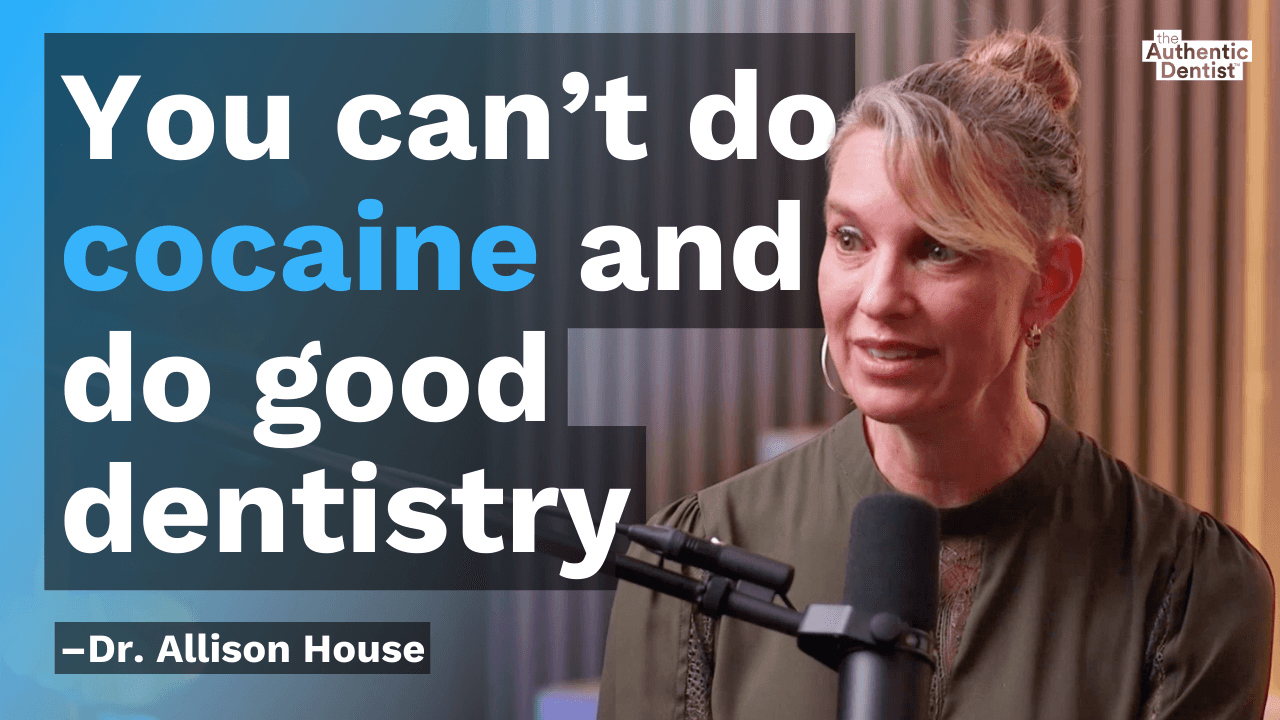
Dr. Allison House, a practicing dentist with over 26 years of clinical experience and co-host of The Authentic Dentist Podcast, offered a different perspective. She asked the question nobody else was asking: What if that dentist is struggling?
The Pattern Behind Bad Dental Work
There is a difference between a bad day and a bad pattern. Every dentist has placed a crown that did not seat correctly. Every dentist has had to redo work. That is part of practicing dentistry.
But when a dentist produces consistently poor outcomes, something else is going on. Dr. House explains it clearly: “That’s not the same as having 12 crowns that went on incorrectly and you didn’t fix them. That’s a pattern and that’s a problem. And that dentist needs to be helped. I don’t think they need to be punished.”
This distinction matters for the entire dental community. Patterns of poor clinical work often signal deeper issues: substance abuse, depression, financial crisis, personal trauma, or burnout. These are the invisible forces that erode clinical excellence when left unaddressed.
Dentist Concern for Dentist: A Model for Ethical Dental Practice
Arizona has a program called Dentist Concern for Dentist, run through the local ADA chapter. Trained dentists visit colleagues when someone raises a concern. The program was originally built around substance abuse, but it addresses a broader spectrum: depression, financial overwhelm, and personal crisis.
Dr. House has used this program herself. She once noticed a pattern of bad work from a local colleague. When a patient reported smelling alcohol on that dentist’s breath, she called the program. “They went over and indeed the young man did have a serious alcohol issue and he was put in rehab. He doesn’t know it was me. But I’m pretty sure that had he continued down that road, he would have died.”
This is what ethical dental practice leadership looks like in action. Instead of reporting a colleague to the board, Dr. House chose intervention. She chose care over condemnation.
Beyond Dentists: Patients and Team Members Deserve the Same Grace
The episode explores how this same principle applies to every relationship in a dental practice.
Dr. House shares the story of a team member whose personality suddenly changed. She became difficult to work with. But instead of letting her go, Dr. House asked what was going on. The team member’s daughter had entered a facility, and she was now raising her granddaughter while managing her own grief. Dr. House responded with a personalized care package for her and her granddaughter. The relationship shifted immediately.
She also describes a longtime patient who began making inappropriate comments to her team. His wife later revealed he was developing dementia. “That’s a different story than just a dirty old man. This is somebody who’s losing his filter because of dementia.”
These stories illustrate a core principle of building dental team culture: people deserve the benefit of the doubt before they receive a verdict.
The Work of Byron Katie: A Tool for Dental Professionals
The episode introduces Byron Katie’s “The Work” as a practical tool for dental professionals who struggle with judgment. The exercise, called “Judge Your Neighbor,” walks you through your frustrations in a structured way. You write out what you are angry about. Then you analyze it.
Dr. House has used this exercise repeatedly in her practice and personal life. “A lot of times you recognize that George is being disrespectful to you because you were disrespectful to him. And you were disrespectful to him because you found that there was a fence that wasn’t really there.”
For dental professionals experiencing burnout or compassion fatigue, this kind of self-examination provides a reset. It creates space between reaction and response.
Dentist Burnout Prevention Starts with How We Treat Each Other
The dental profession loses lives to suicide. That is a documented reality. And one of the contributing factors is isolation. When the profession’s default response to struggle is criticism instead of care, dentists who are drowning stay silent.
Dr. House puts it plainly: “It’s a harsh profession. We are really critical of each other and we never give each other any space to be human.”
Preventing dentist burnout is not only about self-care strategies and practice management efficiency. It is about building a dental community that recognizes the signs, reaches out, and offers help before it is too late.
What Authentic Dental Practice Looks Like
The Authentic Dentist Podcast exists at the intersection of clinical excellence and the human experience of practicing dentistry. This episode is a clear example of what that means in practice.
Authentic dental practice is not about lowering standards. It is about raising them by including the standard of how we treat each other. It means asking “what’s going on?” before asking “what went wrong?” It means recognizing that dental professionals are whole people with complex lives, and that clinical performance is connected to personal wellbeing.
For dental professionals seeking to find fulfillment as a dentist while maintaining excellence, the path forward includes building the kind of community Dr. House describes: one that would call you instead of calling you out.
Takeaways for Your Dental Practice
One bad outcome is human. A pattern of bad outcomes is a signal. Respond with curiosity before criticism.
Programs like Dentist Concern for Dentist exist. Know the resources in your state. Use them.
Apply the same grace to patients and team members. Ask what is going on before deciding what is wrong.
Use tools like Byron Katie’s “The Work” to examine your own assumptions and judgments before they calcify into resentment.
Build a practice culture where people feel safe enough to ask for help. That is the foundation of sustainable dental practice leadership.
Tags
ethics, patient-care, team-building, resilience, communication, burnout-recovery, experienced-practitioners, vulnerability